For Your Kit
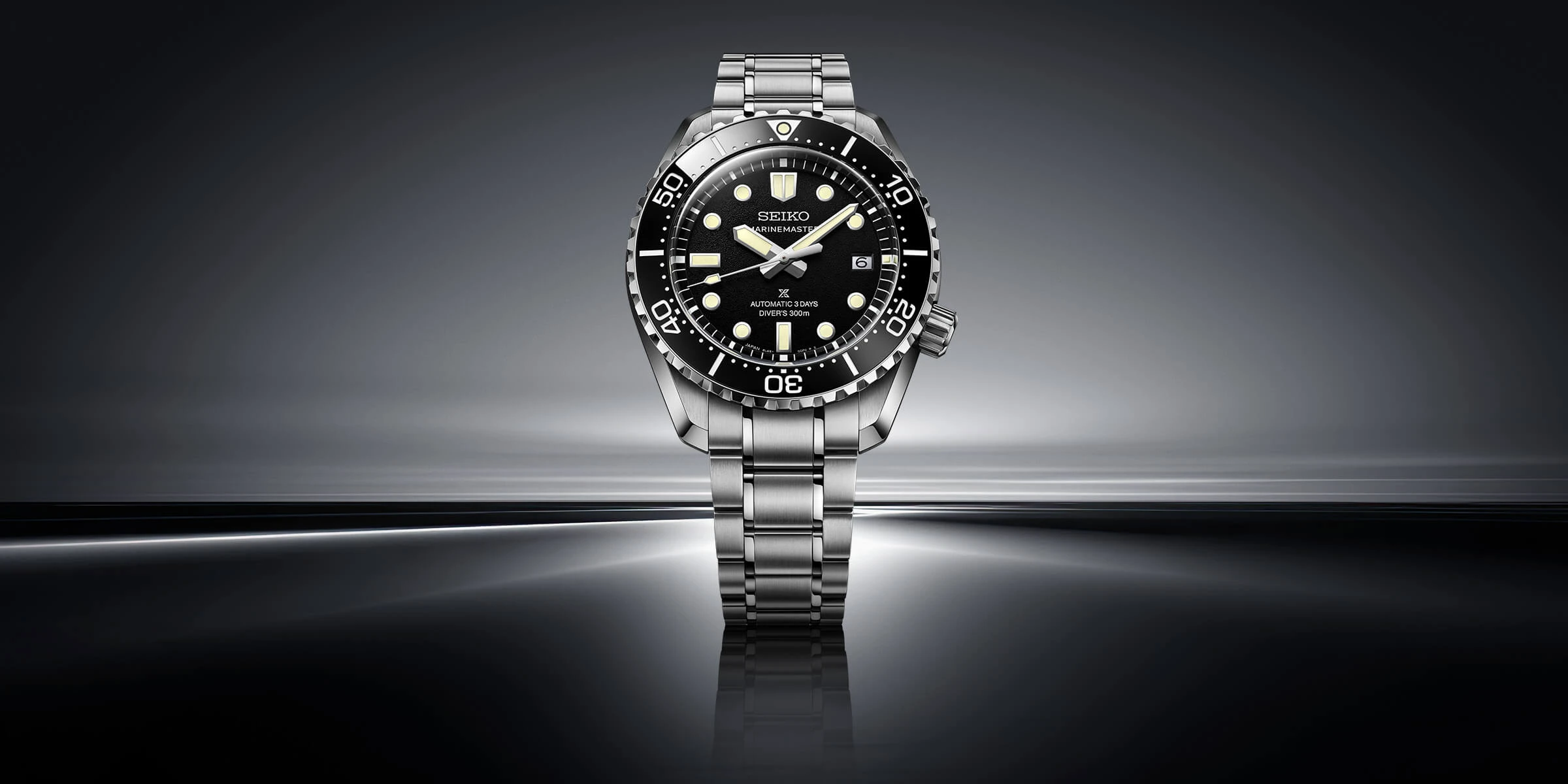
Seiko Marinemaster HBF001 on its steel bracelet in official campaign photography

Watches / No. 04 / Seiko

Seiko Turtle, Marinemaster and 1968 Heritage Diver’s GMT

A silicone-strapped Turtle, a 1968-heritage Marinemaster and a GMT for the next coast over. Set the bezel, shoulder the wet kit and get in the water.

Turtle SRPE93 · $525 USD
Marinemaster HBF001 · $3,600 USD
1968 Heritage Diver’s GMT HBC001 · $1,800 USD
Photography: Seiko · Image source

Turtle / Case45 mm
Turtle / Strap width22 mm
Turtle / Power reserve≈41 hours
Turtle / Diver’s rating200 m
Marinemaster / Case42.6 mm
Marinemaster / Lug width20 mm
Marinemaster / Power reserve≈72 hours
Marinemaster / Diver’s rating300 m
1968 Heritage GMT / Case42 mm
1968 Heritage GMT / Lug width20 mm
1968 Heritage GMT / Power reserve≈72 hours
1968 Heritage GMT / Diver’s rating300 m
01 / Three Seiko divers

Wet sleeves. Salt on the buckle. Another day out.

The Turtle’s broad case and soft silicone belong against a wrist that spends time hauling bags, sorting dive gear and climbing back onto a boat. The Marinemaster brings a tighter mechanical specification and a finely adjustable bracelet to the same wet working day. The 1968 Heritage Diver’s GMT adds a second time zone without giving up its elapsed-time bezel.

The black Prospex Turtle SRPE93, also identified by Seiko as SRPE93K1, is the 45mm, day/date automatic on black silicone. Seiko lists it at $525 in the US. Its 4R36 movement, Hardlex crystal and 200m diver’s rating make a straightforward combination for regular wear above and below the surface.[1][2][3]

The black Prospex Marinemaster 1968 Heritage Diver’s Watch HBF001 / HBF001J1 is Seiko’s current regular-production 1968-heritage Marinemaster, at $3,600. It has a 42.6mm steel case, ceramic bezel insert, dual-curved sapphire and a 300m diver’s rating. The 8L45 automatic supplies approximately three days of reserve.[4][5]

The green Prospex 1968 Heritage Diver’s GMT HBC001 / HBC001J1 is a separate current watch, not another name for that Marinemaster. At $1,800, it pairs a 42mm case and 300m diver’s rating with the 6R54 automatic and a 24-hour hand. Keep a second time zone in view on the journey; keep the unidirectional bezel free for elapsed minutes when you arrive.[6]

These are three complete references with different movements, proportions and attachments. The shared Seiko name is a reason to look closely, not to assume the Turtle’s strap or one bracelet’s adjustment parts will fit the others.
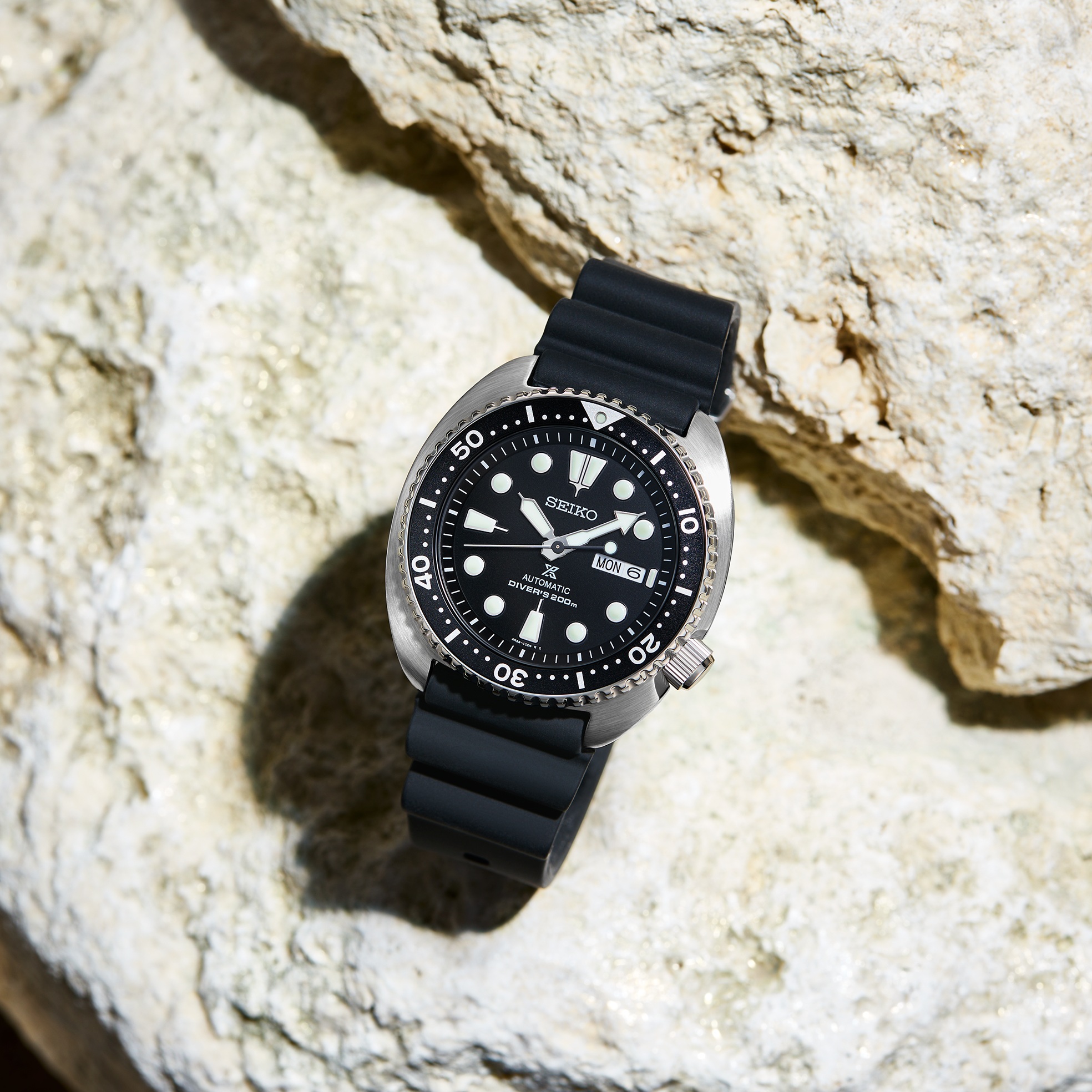
Seiko SRPE93 Turtle on its black silicone strap resting against pale rock
The current SRPE93 in Seiko USA’s product gallery. The photograph shows the watch on rock; it is not a documented expedition or military scene. Photograph: Seiko. Source
02 / Dive watches, Vietnam & the screen

The history belongs to particular watches.

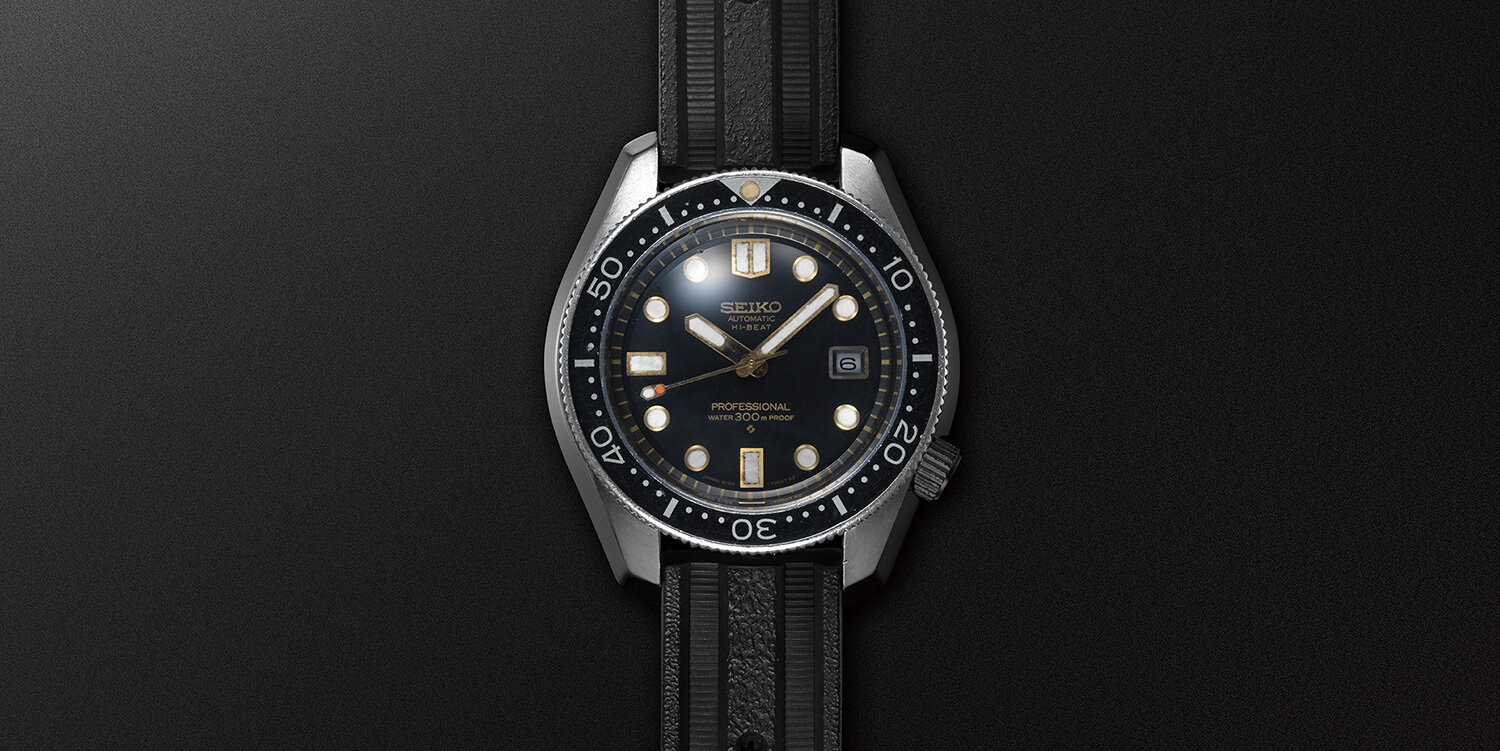
Seiko’s dive-watch story began in 1965 with Japan’s first diver’s watch. In 1968 it introduced a 300m model with a one-piece case and a high-frequency movement beating ten times a second. That professional diver supplies the design foundation for today’s 1968 Heritage range. The HBF001’s 8L45 beats eight times a second and its case has a screw back: it is a modern development, not a mechanical duplicate of the original.[5][7]

The Turtle follows a related but different case-design story. Seiko describes its wide, flowing 1970 diver as the father of the Turtle: the case extended around the crown at four to protect it. Seiko’s UK store explains that the later Turtle nickname came from enthusiasts seeing a shell in the curved case. The current SRPE93 carries that broad, rounded shape, not the exact specification of a 1970 watch.[3][8]

The Vietnam connection is to period 6105-series divers, not to these current references. In his survey of privately bought PX watches, Worn & Wound’s Oren Hartov identifies Seiko 6105 models among the watches available to American servicemen during the war. He also records a sailor’s purchase of a Seiko at the Subic Bay exchange in the Philippines. That is a retail-purchase history, not evidence that the SRPE93, HBF001 or HBC001 was military-issued.[9]

There is a screen connection, too: Martin Sheen’s Captain Willard wears a 6105-8110/8119-family Seiko in Apocalypse Now. Christoph McNeill’s 6105 history for Worn & Wound identifies the family and the film appearance. The current Turtle is not the film prop, and neither current 1968 Heritage model inherits a Vietnam service record through a similar silhouette.[10]

Seiko also records the original 1970 diver on Naomi Uemura’s eighteen-month dog-sled journey from Greenland to Alaska. That is another ancestor’s documented working life. The useful inheritance for a new watch is the habit of taking it outside: rain on a cuff, long days on the coast, and equipment that comes home needing a rinse.[8]

Original 1968 Seiko diver shown in Seiko’s Marinemaster history material
Seiko identifies this as its original 1968 diver. It is the historical watch, not HBF001 or HBC001. No individual reference suffix, military issue or expedition provenance is assigned to this photographed example. Photograph: Seiko. Source
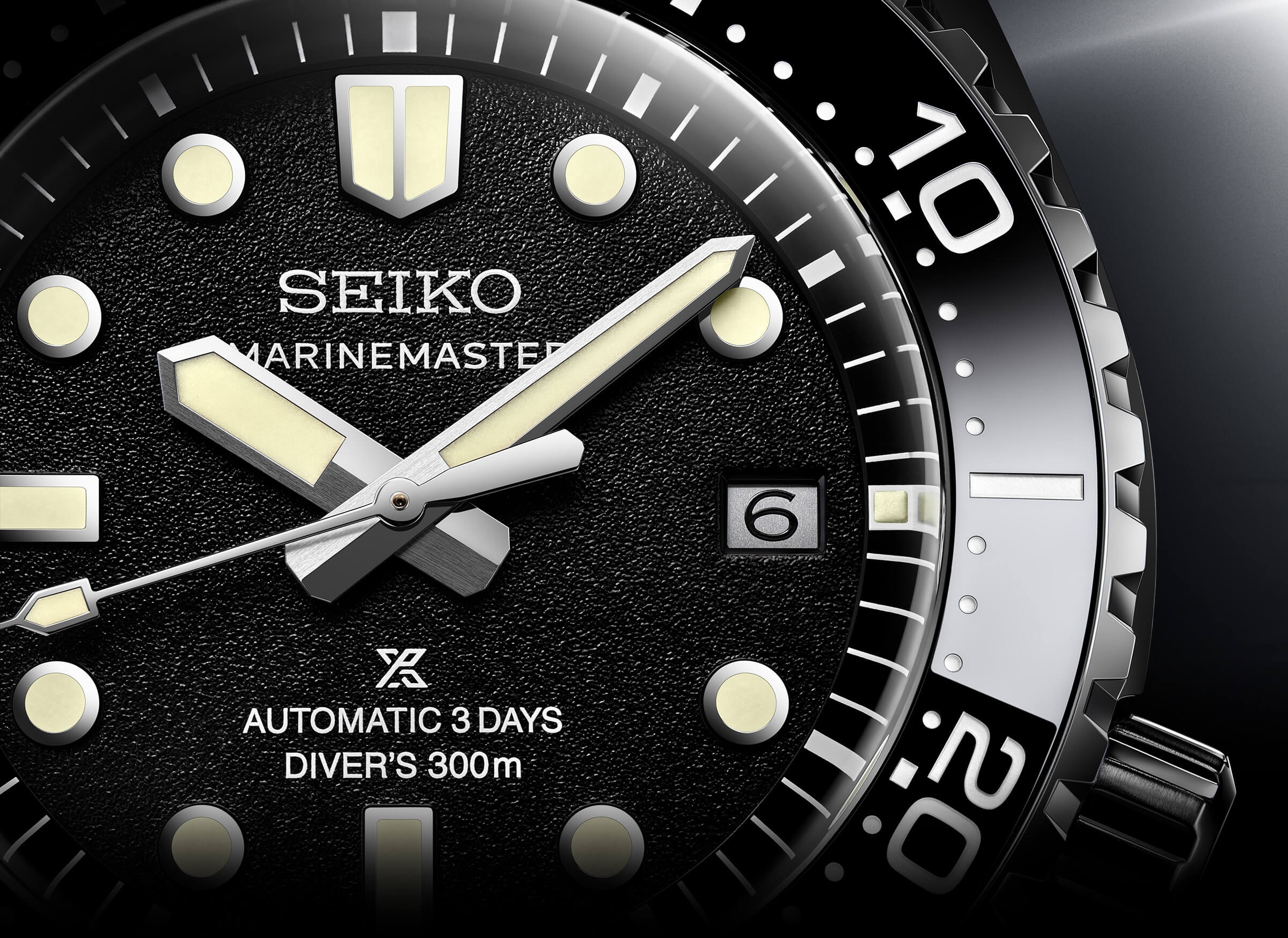
Black HBF001 Marinemaster dial and ceramic bezel in Seiko photography
HBF001: the current black-dial Marinemaster, with its date at three. The photograph belongs to Seiko’s 2026 model presentation. Photograph: Seiko. Source
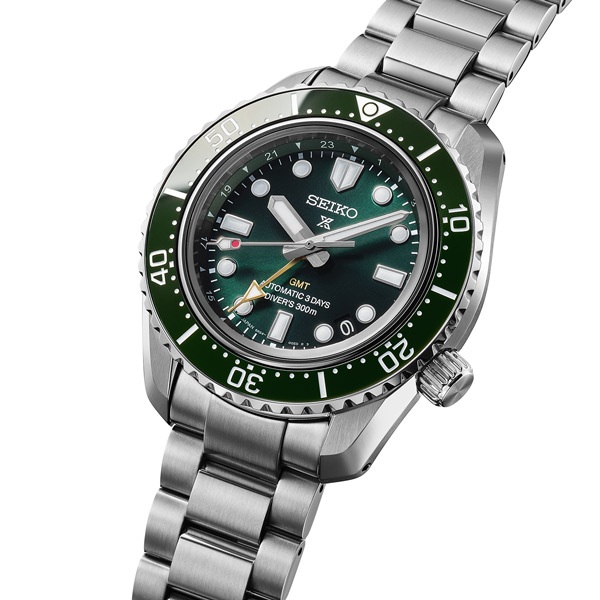
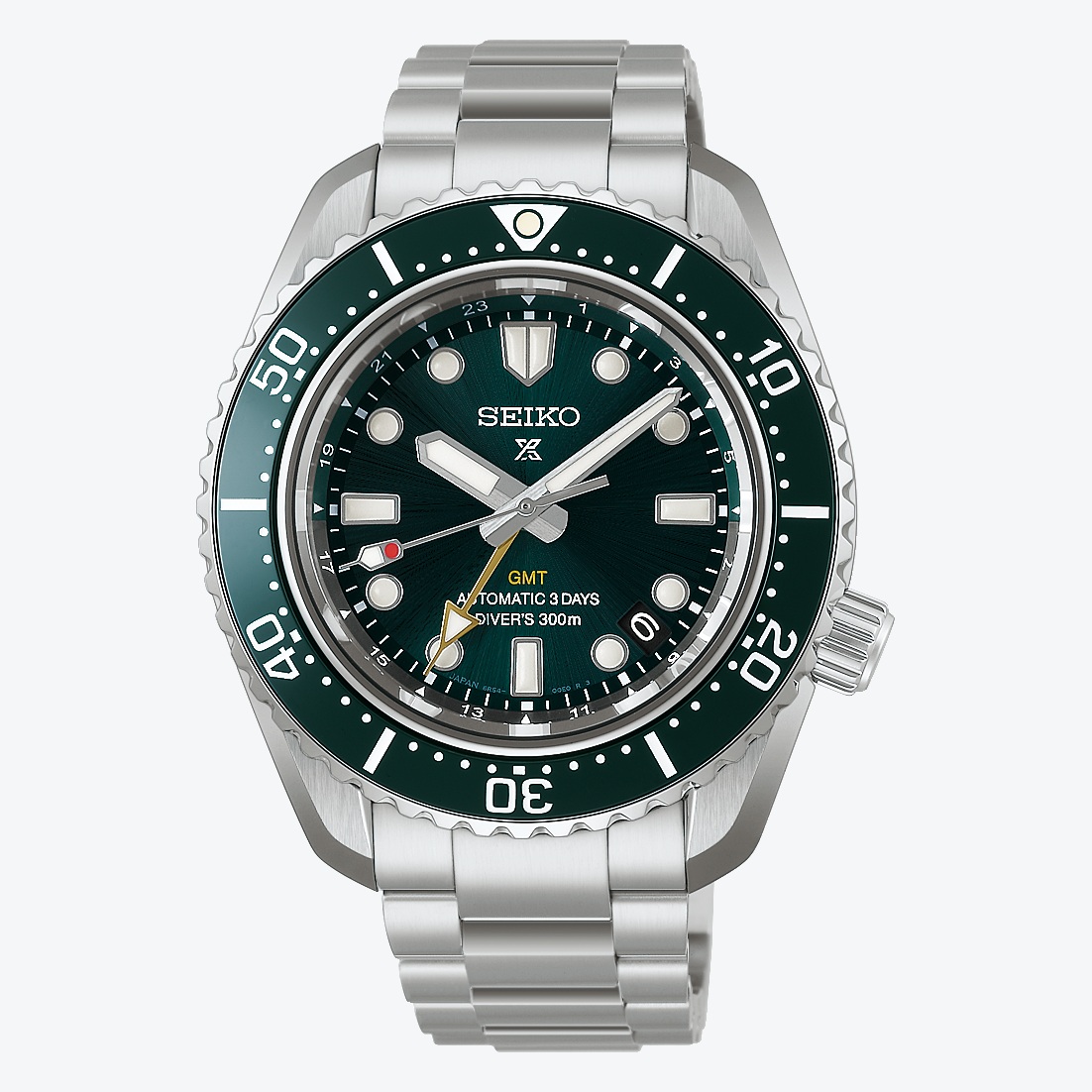
Green HBC001 1968 Heritage Diver’s GMT on steel bracelet
HBC001: the green-dial 1968 Heritage Diver’s GMT. The 24-hour hand is an additional display; the outer bezel remains an elapsed-time scale. Photograph: Seiko. Source
03 / Scuba & everyday water use

Put the timing bezel to work.

Turn the bezel’s starting marker to the minute hand before a timed task, then read the elapsed minutes against that hand. A swim, a surface interval or a job on the dock gives the scale something useful to record. Underwater, a watch is an auxiliary timing instrument, not a substitute for training, a dive plan or the equipment needed to manage depth and breathing gas.

Seiko USA explicitly describes the Turtle as following ISO standards for scuba diving, with a 200m diver’s rating. The HBF001 Marinemaster and HBC001 GMT each carry a 300m diver’s rating. Those are published water-resistance specifications, not suggested personal diving depths or a reason to push beyond your qualifications.[1][2][4][6]

Before a dive, check that the movement is running and sufficiently wound, the crown is completely screwed down, the bezel turns correctly and the strap or bracelet is securely attached. Check the crystal and band for damage. Seiko’s air-diver instructions forbid helium saturation diving and operating the crown underwater. A professional-diver design history does not turn either current 300m reference into a saturation-diving watch.[11][12][13]

Use them through wet weather and salt-water days, but do not confuse hard use with deliberate damage. Seiko warns against striking the watch on rocks. After sea water, rinse in fresh water and dry thoroughly; its instructions recommend water in a bowl rather than a direct blast from a tap. Salt on the case can be the end of a good day. Leaving it there is not part of the adventure.[11][12][13]

04 / Proportions & mechanics

Three complete factory specifications.

The Turtle is the widest at 45mm, but case diameter alone does not predict fit. The Marinemaster is 14.1mm thick and 49.3mm from lug to lug; the GMT is 13.3mm thick and 48.6mm long. Try the watch with the strap or bracelet you will actually use, move your wrist and check how it sits alongside a sleeve or wetsuit.[1][4][6]

Seiko’s global US page rounds Turtle thickness to 13.4mm; Seiko USA gives 13.42mm. Neither cited official US page publishes its lug-to-lug measurement. The approximately 41- and 72-hour reserves below refer to fully wound movements, not a promise that a short walk will provide that much running time.[1][2][4][6]

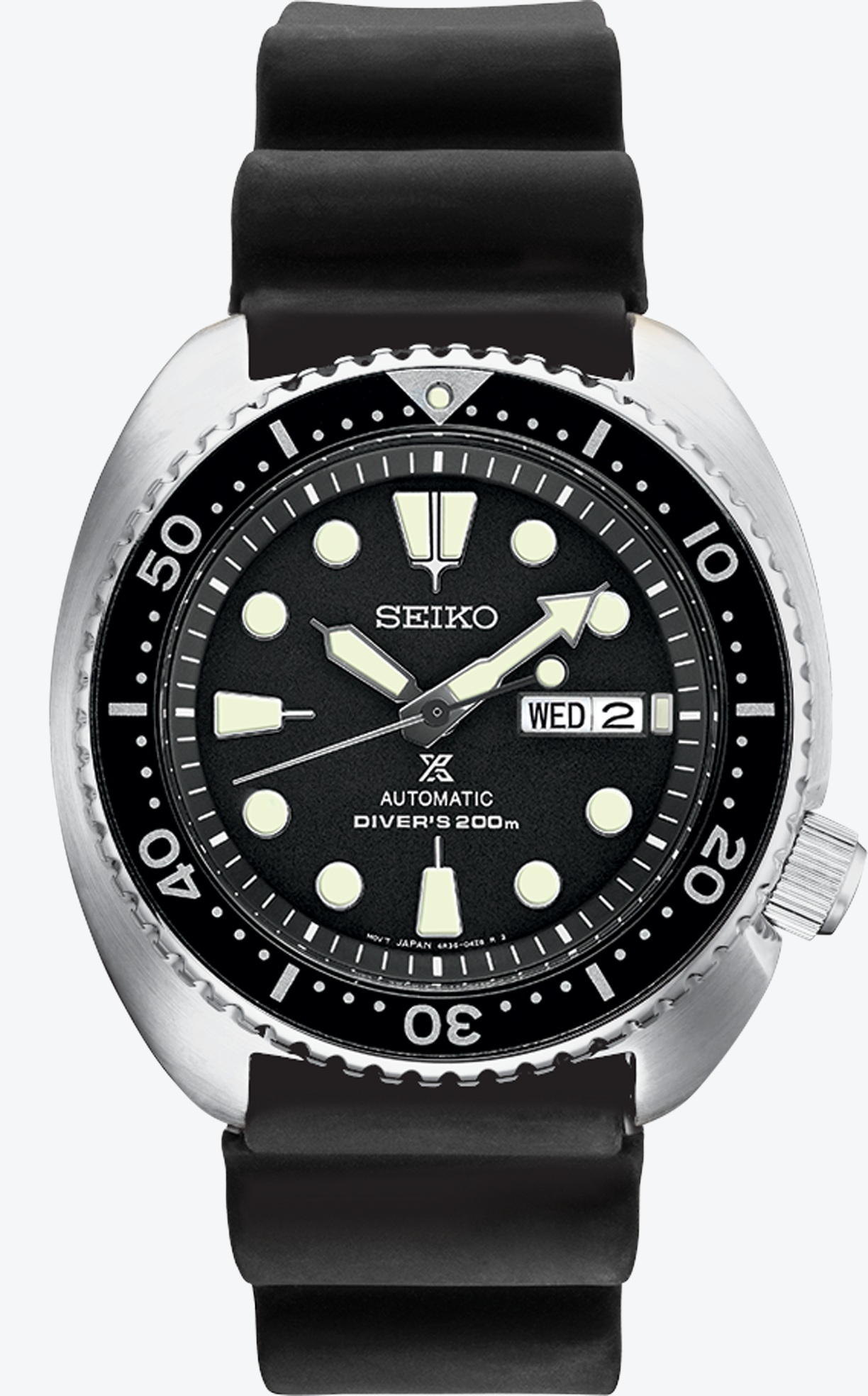
Turtle / SRPE93Turtle / SRPE93 in Seiko’s official product photographyPhotograph: Seiko. Source
Turtle / SRPE93 · Seiko specifications
ReferenceSRPE93 · SRPE93K1 on Seiko’s UK page
CaseStainless steel · 45.0 mm diameter
Thickness13.4 mm globally; 13.42 mm at Seiko USA
Lug-to-lugNot published on the cited official US pages
Lug width22 mm
Water resistance200 m / 660 ft diver’s · ISO scuba standard stated by Seiko USA
BezelUnidirectional · elapsed-time scale
CrystalHardlex
LumeLumiBrite on hands and indexes
Movement4R36 · automatic with manual winding · stop seconds
Frequency / jewels21,600 vibrations per hour · 24 jewels
Power reserveApproximately 41 hours
DisplayHours, minutes, central seconds, day and date
Crown / backScrew-down crown · screw case back
Factory strapBlack silicone · pin buckle
Weight124.0 g, as published on Seiko’s global US page
US listed price$525, before tax
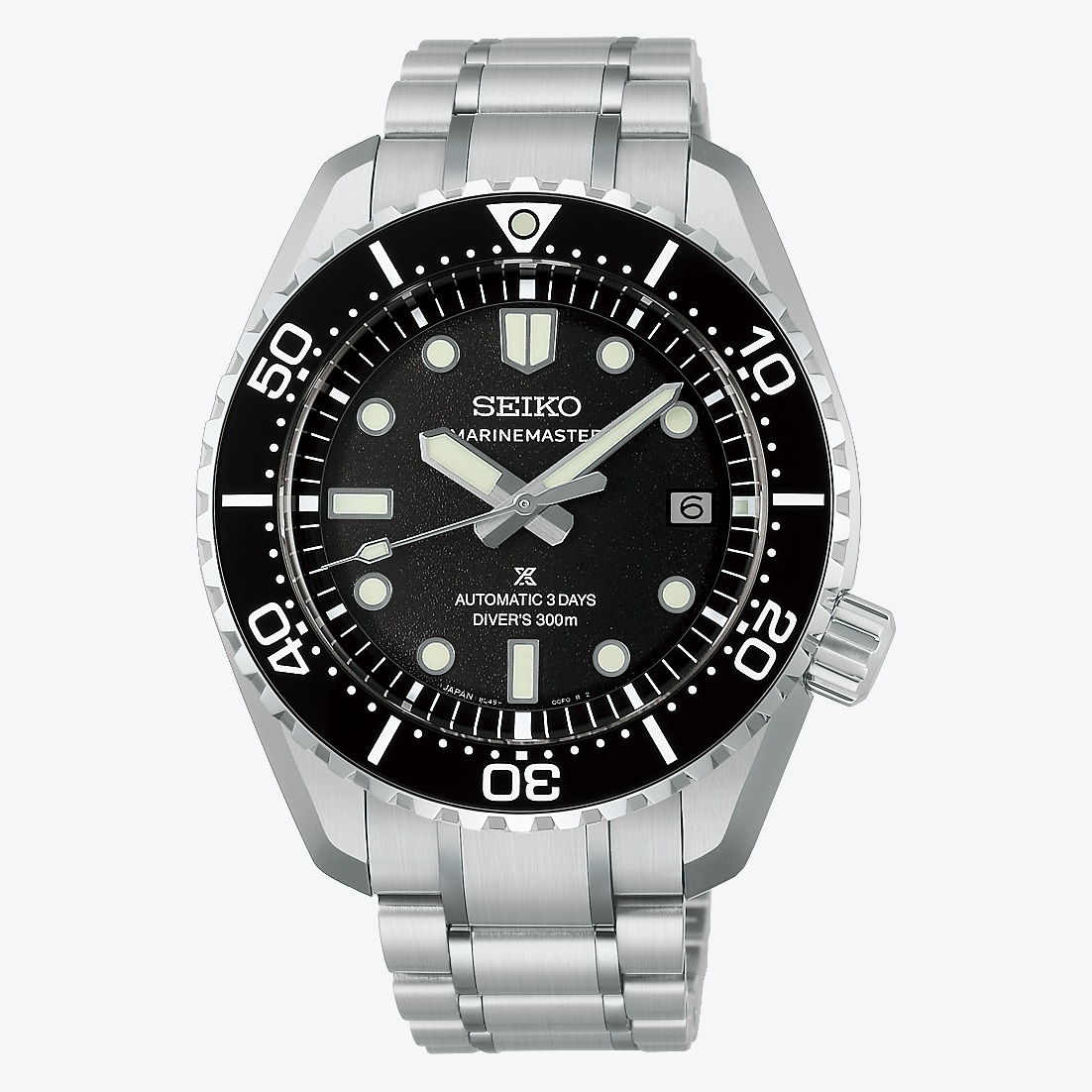
Marinemaster / HBF001Marinemaster / HBF001 in Seiko’s official product photographyPhotograph: Seiko. Source
Marinemaster / HBF001 · Seiko specifications
Full model nameProspex Marinemaster 1968 Heritage Diver’s Watch
ReferenceHBF001 / HBF001J1
CaseStainless steel · 42.6 mm diameter
Thickness / lug-to-lug14.1 mm / 49.3 mm
Lug width20 mm
Water resistance300 m / 1,000 ft diver’s · air diving, not helium saturation
BezelUnidirectional · stainless steel with ceramic display
CrystalDual-curved sapphire · inner anti-reflective coating
LumeLumiBrite on hands, indexes and bezel
Movement8L45 · automatic with manual winding · stop seconds
Frequency / jewels28,800 vibrations per hour · 35 jewels
Published precision−5 to +10 seconds per day
Power reserveApproximately 72 hours / 3 days
DisplayHours, minutes, central seconds and date
Crown / backScrew-down crown · screw case back
Magnetic resistance4,800 A/m
Factory braceletStainless steel · three-fold push-button clasp · solid & slide adjuster
Clasp adjustmentUp to 16 mm in 2 mm increments
WeightNot published on the cited official product page
US listed price$3,600, before tax
1968 Heritage GMT / HBC0011968 Heritage GMT / HBC001 in Seiko’s official product photographyPhotograph: Seiko. Source
1968 Heritage GMT / HBC001 · Seiko specifications
Full model nameProspex 1968 Heritage Diver’s GMT Watch
ReferenceHBC001 / HBC001J1
CaseStainless steel · 42.0 mm diameter
Thickness / lug-to-lug13.3 mm / 48.6 mm
Lug width20 mm
Water resistance300 m / 1,000 ft diver’s · air diving, not helium saturation
BezelUnidirectional · stainless steel with ceramic display
CrystalSapphire · inner anti-reflective coating
LumeLumiBrite on hands, indexes and bezel
Movement6R54 · automatic with manual winding · stop seconds
Jewels24
Published precision−15 to +25 seconds per day
Power reserveApproximately 72 hours / 3 days
DisplayHours, minutes, central seconds, date and 24-hour dual-time hand
Crown / backScrew-down crown · screw case back
Magnetic resistance4,800 A/m
Factory braceletStainless steel · three-fold clasp · secure lock and push-button release · solid & slide adjuster
Clasp adjustmentSix steps of approximately 2.5 mm · approximately 15 mm total
WeightNot published on the cited official product page
US listed price$1,800, before tax
05 / The Prospex collection

A nickname, a flagship series and a GMT.

“Turtle” describes the case shape enthusiasts named; “Marinemaster” is a series Seiko positions as its flagship for dive watches. “1968 Heritage” runs across more than one current model family. HBF001 is the Marinemaster selected here; HBC001 is the separate 1968 Heritage GMT. Neither is a 1965-family diver being relabeled for the occasion.[3][7][14]

The closest HBF001 siblings are the HBF002 / HBF002J1 JAMSTEC Limited Edition, with a blue dial inspired by icebreaker tracks, at $3,900 and limited to 1,000; and the green HBF003 / HBF003J1 Save the Ocean Limited Edition, inspired by mangroves, at $3,600 and limited to 900. Both officially belong to the Marinemaster 1968 Heritage line.[5][15][16]

Seiko’s current catalog also retains the SLA077 and SLA079 Marinemaster 1968 Heritage models at $2,900. The SLA079 uses the 8L35 and approximately 50 hours of reserve, rather than the HBF001’s 8L45 and approximately 72. It is an alternative still listed by Seiko, not the reference photographed or specified as the main Marinemaster here.[14][17]

For the GMT, HBC002 / HBC002J1 is the black-dial sibling, also $1,800, with the same published 42mm diameter, 300m rating and 6R54. HBC001 is green in Seiko’s own product photography. Match the reference and the dial together rather than relying on a retailer’s color label.[6][18]

Choose for the days you will actually put on it. The Turtle gives you day/date and silicone. The Marinemaster gives you the tighter published precision range of the 8L45 and its own bracelet adjuster. The GMT gives you another time zone while retaining a dive bezel. All three can earn their keep in water; the extra functions should earn their space on your wrist.

06 / Straps & bracelets

22 mm on the Turtle. 20 mm on the others.

The Turtle arrives on black silicone with a pin buckle. Its 22mm opening uses a conventional removable-bar strap attachment, not Tudor FXD-style fixed bars. Silicone is an easy starting point for sweat, rain and a proper soaking. Check the buckle, holes and attachment before you go in, and replace a damaged band rather than asking it for one more trip.[1][2][3][11]

A 22mm replacement still needs the correct spring bars, tip fit, thickness and clearance at the case. Seiko’s product page does not publish the bar-body and tip diameters. Confirm suitable hardware with Seiko or the strap maker; a generic quick-release bar is not automatically the correct diver’s bar. A fabric pass-through strap may be an option with suitable clearance, but this watch does not require a fixed-bar strap.[1][11]

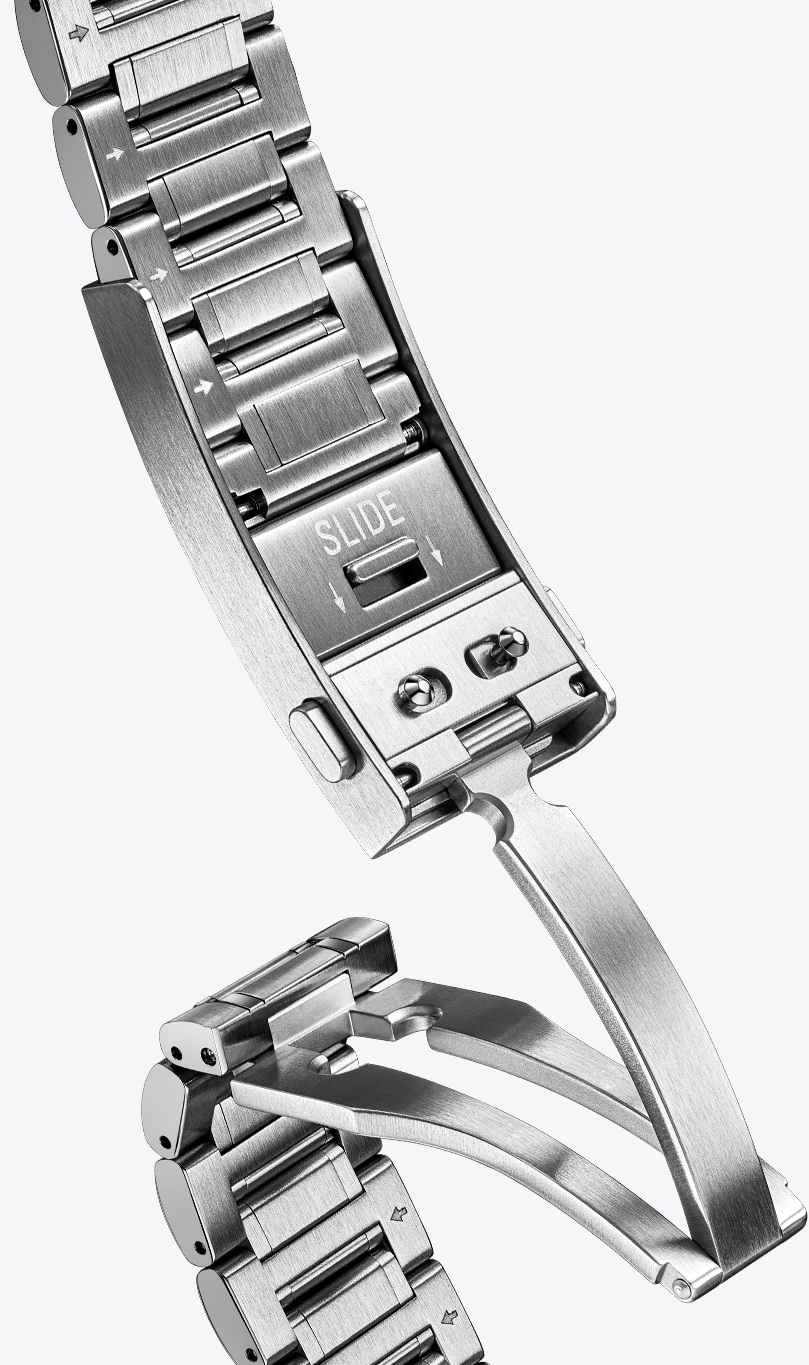
The HBF001 comes on a steel bracelet, with 20mm lugs. Its updated clasp adjusts by up to 16mm in 2mm increments; Seiko says the extension can be retracted even while the clasp is closed. That gives you a practical way to manage fit through a long day of movement and changing wrist size.[4][5]

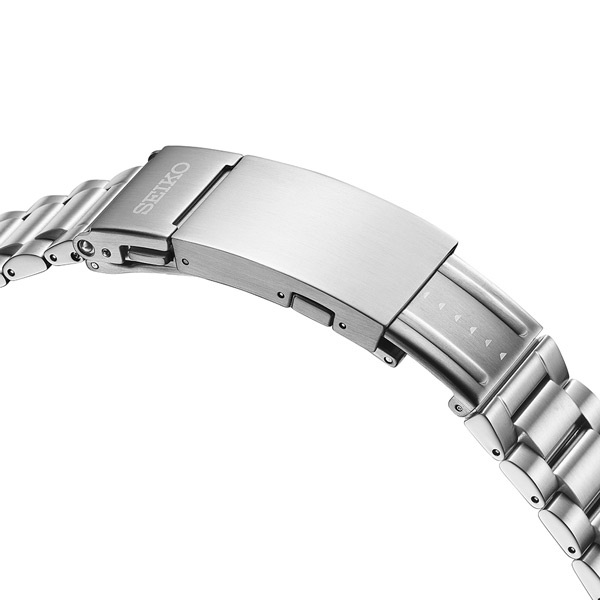
The HBC001 also has 20mm lugs and a steel bracelet, but its clasp specification is different: six steps of approximately 2.5mm, for approximately 15mm overall. Do not transfer the Marinemaster’s 16mm figure to the GMT. Use the adjuster, find a secure fit and check the clasp’s closure before swimming.[6]

For either bracelet watch, replacement rubber, bars and shaped end links need reference-specific confirmation. The common 20mm width does not establish that HBF001 and HBC001 bracelets or end links interchange. Neither current product page presents its attachment as a universal tool-free system. Size the factory bracelet properly first; changing straps should make the watch more useful, not compromise retention.

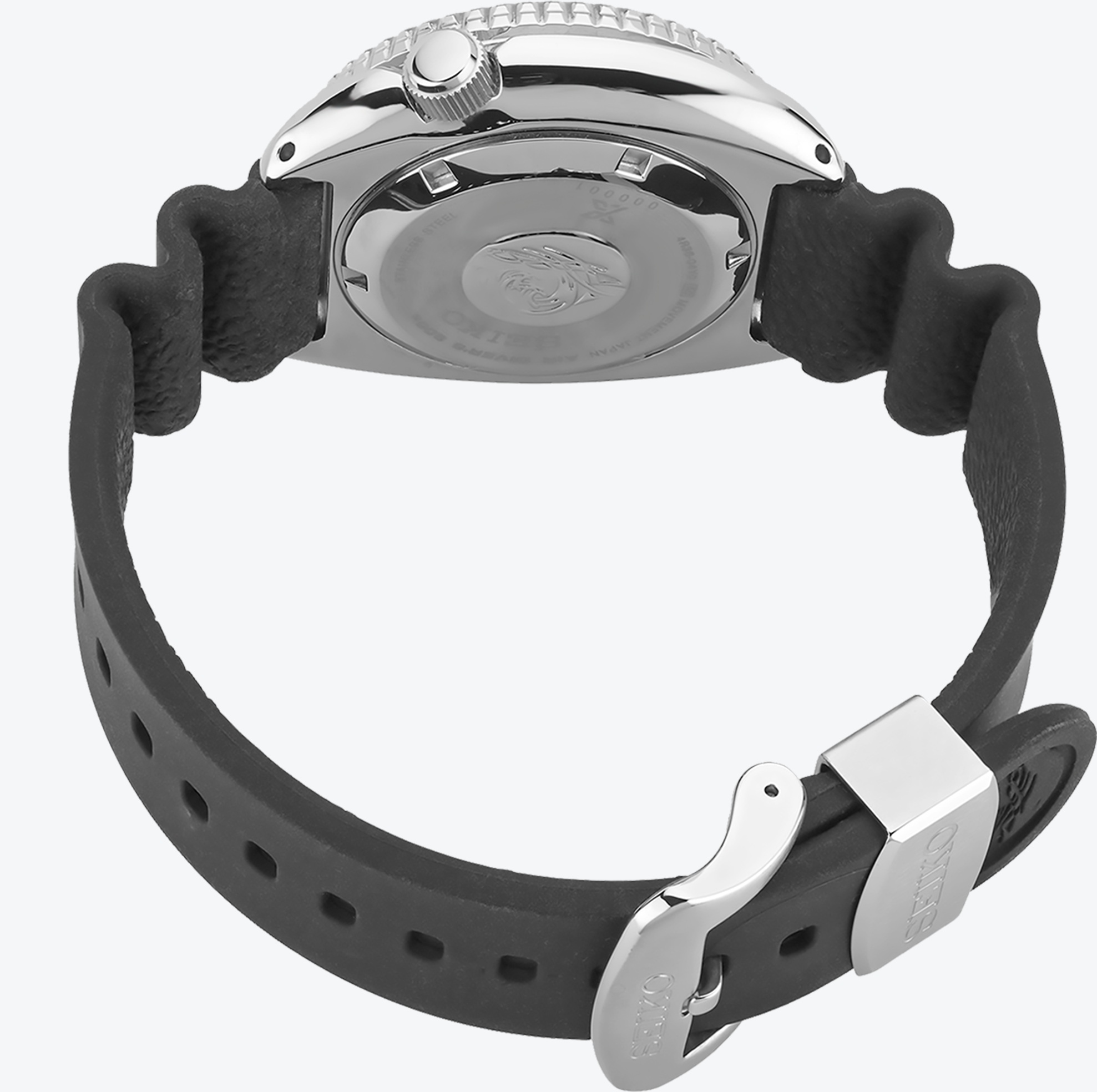
Back and black silicone strap of current Seiko SRPE93
SRPE93’s silicone strap, pin buckle and screw case back, from Seiko USA’s current product gallery. Photograph: Seiko. Source
Open HBF001 steel bracelet clasp in Seiko’s 2026 campaign
The HBF001 clasp shown in Seiko’s Marinemaster presentation. Its published adjustment is up to 16mm in 2mm increments. Photograph: Seiko. Source
HBC001 and HBC002 bracelet clasp shown by Seiko
The clasp Seiko illustrates for HBC001 and HBC002. Its approximately 15mm range is separate from the Marinemaster’s 16mm system. Photograph: Seiko. Source
07 / Finding the references

Pick one. Set it. Take it out.

Start with Seiko’s product pages and its official retailer network. Confirm the complete reference, included strap or bracelet, warranty and availability. The prices below are Seiko’s listed US prices before tax, checked November 8, 2026. An official catalog listing does not guarantee immediate stock.

Turtle

Prospex Turtle

SRPE93 / SRPE93K1
Seiko’s listed US price: $525, before tax.

Black silicone · day/date · 200m diver’s rating. Seiko USA’s online store was unavailable for purchase when checked; ask an official retailer about stock.

Marinemaster

Marinemaster 1968 Heritage Diver’s Watch

HBF001 / HBF001J1
Seiko’s listed US price: $3,600, before tax.

Black dial · steel bracelet · 8L45 · 300m diver’s rating. Confirm HBF001 rather than an older SLA reference if you want this movement and clasp.

1968 Heritage GMT

1968 Heritage Diver’s GMT Watch

HBC001 / HBC001J1
Seiko’s listed US price: $1,800, before tax.

Green dial · steel bracelet · 6R54 dual time · 300m diver’s rating. Confirm the current 300m reference and its adjustable clasp.

Ready for the next trip

For a used example, inspect the actual watch, crystal, crown, band and service record. Original depth markings are not a pressure test of aging seals. Have water resistance checked before taking an unknown watch diving. Seiko recommends periodic inspection and overhaul in its diver instructions; service is part of keeping a watch in regular use.[11][12][13]

Then give the bezel a starting point and the watch a full day: loading the car, getting the kit wet, reading the time with tired hands and rinsing the salt off at home. These Seikos have different cases and different movements. None needs to spend the trip in its box.

Further reading

Sources & photography

Specifications and listed US prices checked November 8, 2026. All photographs: Seiko. Current product photographs identify SRPE93, HBF001 and HBC001; the historical image is separately identified by Seiko as the original 1968 diver. No soldier or film still is presented as evidence of a current watch’s service history. Select a photograph to open its source-size JPG.

  1. Seiko — SRPE93: US list price, dimensions, 4R36, 22mm lugs, silicone, Hardlex, weight and 200m diver’s rating.
  2. Seiko USA — SRPE93: ISO scuba statement, 21,600 vph, 13.42mm thickness, black silicone and current product photography.
  3. Seiko official UK store — SRPE93K1: Turtle nickname, reference, pin buckle and strap specifications.
  4. Seiko — HBF001 / HBF001J1: Marinemaster 1968 Heritage Diver’s Watch, $3,600 US price and complete current specifications.
  5. Seiko — 2026 Marinemaster 1968 Heritage presentation: HBF001, HBF002, 8L45, ceramic bezel, 16mm clasp adjustment and identified current/historical photographs.
  6. Seiko — HBC001 / HBC001J1: separate 1968 Heritage Diver’s GMT, $1,800 US price, specifications, approximately 15mm clasp adjustment and photographs.
  7. Seiko — 1968 Diver: original high-frequency 300m one-piece case and current separation of Marinemaster and Heritage models.
  8. Seiko — March 21, 2019: original 1970 diver as father of the Turtle; protected crown and Naomi Uemura’s Greenland-to-Alaska journey. The release’s SLA033 is not the current Turtle.
  9. Worn & Wound — Oren Hartov, April 17, 2018: privately purchased Vietnam-era PX watches, Seiko 6105 family and Subic Bay purchase account.
  10. Worn & Wound — Christoph McNeill, January 20, 2014: 6105-8110/8119 family, Vietnam-era servicemen and Martin Sheen’s Apocalypse Now watch.
  11. Seiko — 4R35/4R36 diver instructions: air diving, pre-dive checks, crown, band attachment, care and maintenance; not helium saturation diving.
  12. Seiko — 8L45 air-diver instructions: diving limits, inspection, care and maintenance; distinct from the separate saturation-diver manual.
  13. Seiko — 6R54 air-diver instructions: dive precautions, auxiliary timing role, crown and band checks; not helium saturation diving.
  14. Seiko — current Marinemaster collection: HBF series and still-listed SLA077/SLA079; flagship-series positioning.
  15. Seiko — HBF002: 1968 Heritage JAMSTEC Limited Edition, 1,000 pieces, $3,900 US.
  16. Seiko — HBF003: 1968 Heritage Save the Ocean Limited Edition, mangrove-inspired green, 900 pieces, $3,600 US.
  17. Seiko — SLA079: still-listed 1968 Heritage Marinemaster with 8L35, approximately 50-hour reserve and $2,900 US price.
  18. Seiko — HBC002: sibling 1968 Heritage Diver’s GMT, $1,800 US and current specifications.
  19. Seiko official UK store — HBF001J1: black dial, steel bracelet, air-diver identification and ISO diving statement.
  20. Seiko — 4R diver precautions: fresh-water bowl rinse, impact warning and two-to-three-year overhaul recommendation.
  21. Seiko — 8L45 air-diver precautions: pre-dive checks and fresh-water care.

Hero: HBF001 from Seiko’s 2026 Marinemaster 1968 Heritage presentation. Turtle photographs: Seiko USA’s SRPE93 gallery. GMT photographs: Seiko’s HBC001 page. Photography remains credited to Seiko; reproduction does not imply endorsement.